Which voices are missing from the narrative of Munich we are all familiar with? And how can we expand literary memory to incorporate these voices? These two questions are at the heart of the interdisciplinary research project #FemaleHeritage Monacensia began working on in 2020.
German original: This article is an English translation* of the German original »#FemaleHeritage 2020–2025: Initiativen und Entwicklung – Ein Kulturerbeprojekt der Monacensia, Teil 2«, first published on April 7, 2025. Following the project’s Special Mention at the 7th Culture 21 International Award in 2026, the article is now available in English. Unless marked otherwise, the linked pages are in German.
The fact that female cultural heritage is still far from equal recognition is evident just by looking at Munich’s street names. In recent years, the Monacensia has done a great deal to increase the visibility of this literary heritage. That’s why I’m eager to see what’s next.
Dominik Krause, Deputy Mayor of the State Capital of Munich, March 8, 2024
With its cultural heritage project and eponymous community hashtag, Monacensia is forging ever closer ties with the city’s community and seeking a form of collective remembrance rooted in solidarity. The hashtag has gained traction online through the blog parade «Women and Remembrance Culture» (2020–2021) and continues to serve as a tag for topics related to women’s cultural heritage today.
The project was launched in 2020 under the patronage of Deputy Mayor Katrin Habenschaden.
To underscore the significance that the City of Munich attaches to this project, I, as mayor, have assumed the role of honorary patron. Projects like this ensure that our culture of remembrance grows more nuanced and diverse. They can foster a new sense of belonging. No one should underestimate the significance of entire sections of society being all but absent from a society’s cultural memory.
Katrin Habenschaden, Deputy Mayor of the State Capital of Munich (2020–2023)
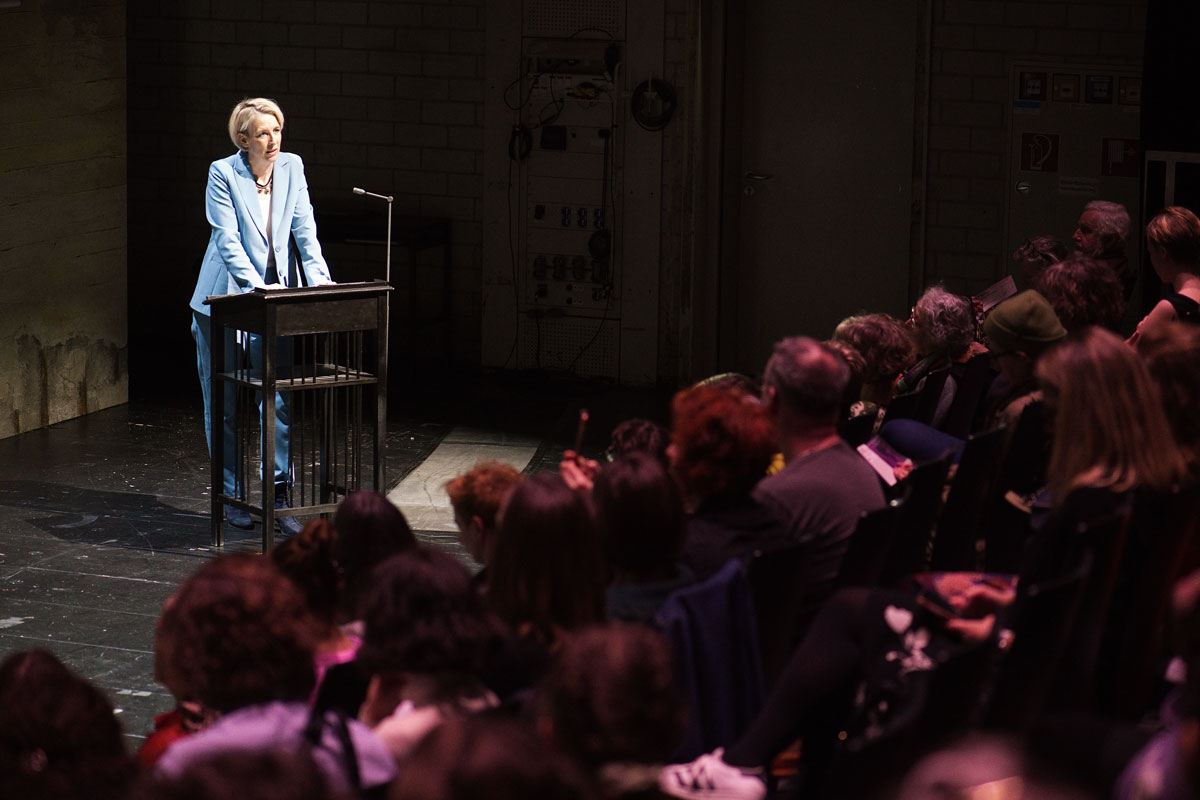
In October 2023, Dominik Krause succeeded Katrin Habenschaden as Deputy Mayor.
For International Women’s Day 2025, the anniversary post «Open, connected, digital: #FemaleHeritage is reshaping the Monacensia» looks at how the project has developed and what it has achieved. The following list of results follows on from the summary published in 2022, #FemaleHeritage 2020–2025: What We Have Achieved – a Cultural Heritage Project by Monacensia. It provides an overview of key moments and initiatives that illustrate the commitment and collaborative efforts of the many partners and allies involved in the #FemaleHeritage project. Due to the sheer volume of entries, the overview is structured as a list.
Five years in, it is the digital curation and networking activities that deserve special recognition – they are what enables our joint and participatory research, sustainable documentation, and communication. Tanja Praske has played a key role in making #FemaleHeritage visible and accessible online today.
Projects and Initiatives for #FemaleHeritage 2020–2025
Campaigns, Network Projects, and Event Series
Selected examples
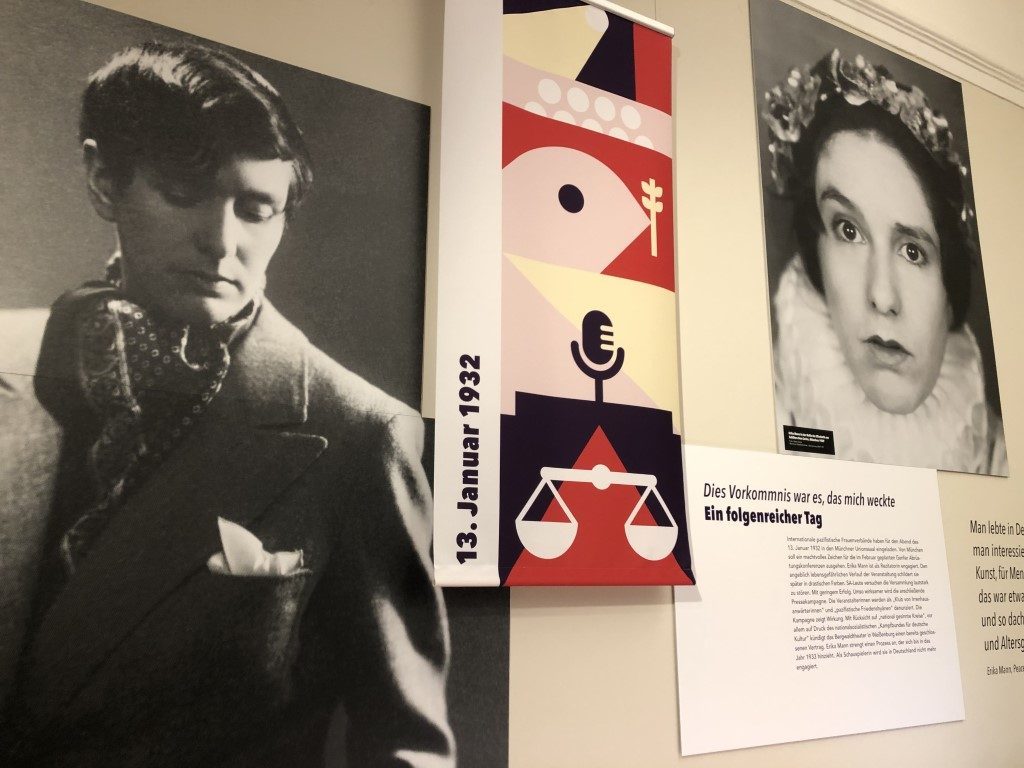
- #ErikaMann – a Networking Campaign
- Erika Mann Lecture
- #FemaleHeritage – Blog Parade “Women And The Culture of Remembrance”
- #GLAMInstaWalk – Monacensia Initiative for Munich’s Cultural Institutions 2023–2025
- #SchreibResi – Dana von Suffrin 2022, turtle Magazin(e) 2023, Annegret Liepold 2024
Indexing and Digitization Projects

- Annemarie Schwarzenbach, publication of her correspondence with Erika and Klaus Mann as part of the online project Annemarie Schwarzenbach: Digitale Edition der Kleinen Formen und Briefe. Reisetexte, Intermedialität, Netzwerke
- Rabe Perplexum, cataloguing of the literary estate and digitization of approximately 450 videotapes containing unique recordings of Rabe’s performances and early digital art
- Franziska zu Reventlow, in-depth cataloguing and complete digitization of her estate with publication at www.monacensia-digital.de (2025)
- Käthe Mohr, cataloguing of her estate, including Max Mohr’s letters from exile and family photos
- Helene Böhlau, Indexing of her partial estate with documents relating to her divorce from her husband Omar al Raschid Bey and her wedding in Constantinople
- Gerda Bischof, cataloguing of her estate with documents dating from the Nazi era and her correspondence with Bayerischer Rundfunk (Bavarian Broadcasting Corporation)
Exhibitions with Women Protagonists
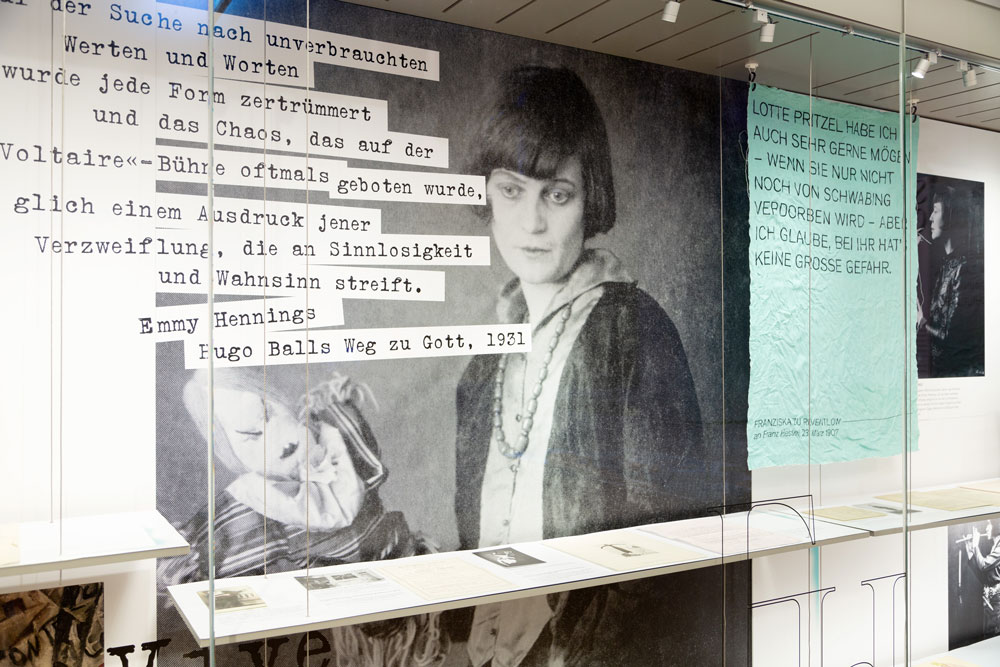
Since 2019, Monacensia has curated two exhibitions featuring women protagonists: «Erika Mann – Cabaret Artist – War Reporter – Political Orator» (curator: Irmela von der Lühe) and «Live Freely! Women of the Bohemia 1890–1920» (curators: Laura Mokrohs and Sylvia Schuetz). Both exhibitions have toured various locations, integrating relevant content from each stop along the way. They remain available upon request and can be tailored to suit specific needs. The visual design for both exhibitions was crafted by Büro Alba in Munich.
- Erika Mann. Kabarettistin – Kriegsreporterin – Politische Rednerin (Erika Mann. Cabaret artist – war correspondent – political speaker) I A MON Mag blog post
- Erika Mann. Kabarettistin – Kriegsreporterin – Politische Rednerin (Erika Mann. Cabaret artist – war correspondent – political speaker) I Monacensia at Hildebrand House
- Erika Mann. Kabarettistin – Kriegsreporterin – Politische Rednerin (Erika Mann. Cabaret artist – war correspondent – political speaker) I Arts in Exile
- Erika Mann I Exhibitions and themed space at Goethe Institute Czechia
- Erika Mann I Museumspädagogisches Zentrum München (Museum Education Center Munich)
- Frei leben! Die Frauen der Bohème 1890–1920 (Live Freely! Women of the Bohemia 1890–1920) I Monacensia at Hildebrand House
- Frei leben! Die Frauen der Bohème 1890–1920 (Live Freely! Women of the Bohemia 1890–1920) I Schloss vor Husum, Museumsverbund Nordfriesland (Castle near Husum, North Frisia Museum Association)
Exhibitions With a Focus on #FemaleHeritage
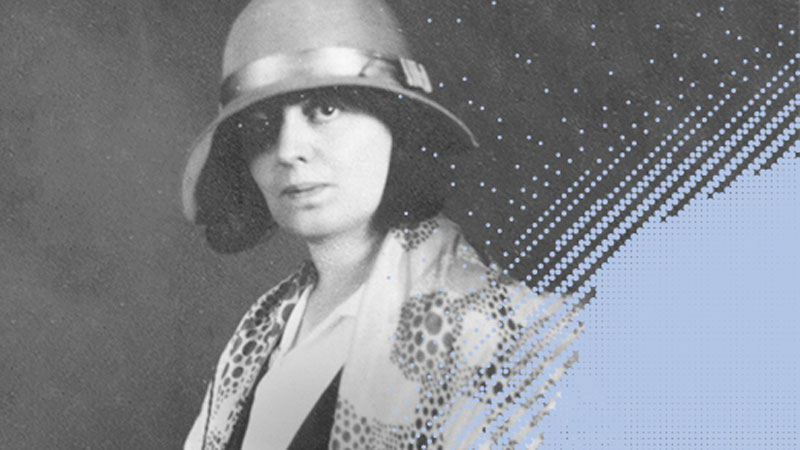
Monacensia exhibitions do not necessarily focus on women as protagonists. But giving #FemaleHeritage greater visibility while weaving together literary and urban histories from diverse layers and narratives is a crucial part of the exhibition curation process.
- Pop Punk Politik – The 1980s in Munich
This rotating exhibition explored the diverse and young body of writing that emerged in Munich in the 1980s. Radical aesthetics served as a vehicle for political demands. New social and urban movements included the gay movement’s activism against discrimination and rigid AIDS policies, as well as the women’s/lesbian movement’s campaign for self-determined spaces. The exhibition provided an opportunity to bring Rabe Perplexum’s estate out of the archives for a debut in the spotlight and to launch an in-depth cataloguing and digitisation project. At the same time, the exhibition created an opportunity to establish contact with Cora Frost and Lillemors Frauenbuchladen. In-depth blog posts on #PopPunkPolitik are available online at MON Mag.
- Maria Theresia 23. Biography of a Munich Villa
The permanent exhibition «Maria Theresa 23. Biography of a Munich Villa», which opened in late October 2024, vividly illustrates the curators’ approach. Sylvia Schütz and Ellen Bosnjak (both from Monacensia) trace the story of Elisabeth Braun, the former owner of the Hildebrand House, through various archives. And yet much of her life remains shrouded in mystery. Why did Elisabeth Braun refer to herself as a writer? Did she publish under a pseudonym? Why are there no records of her literary work? Elisabeth Braun was persecuted by the Nazi regime and murdered in Kaunas. She resisted as long as she could.
Books and Literary Essays
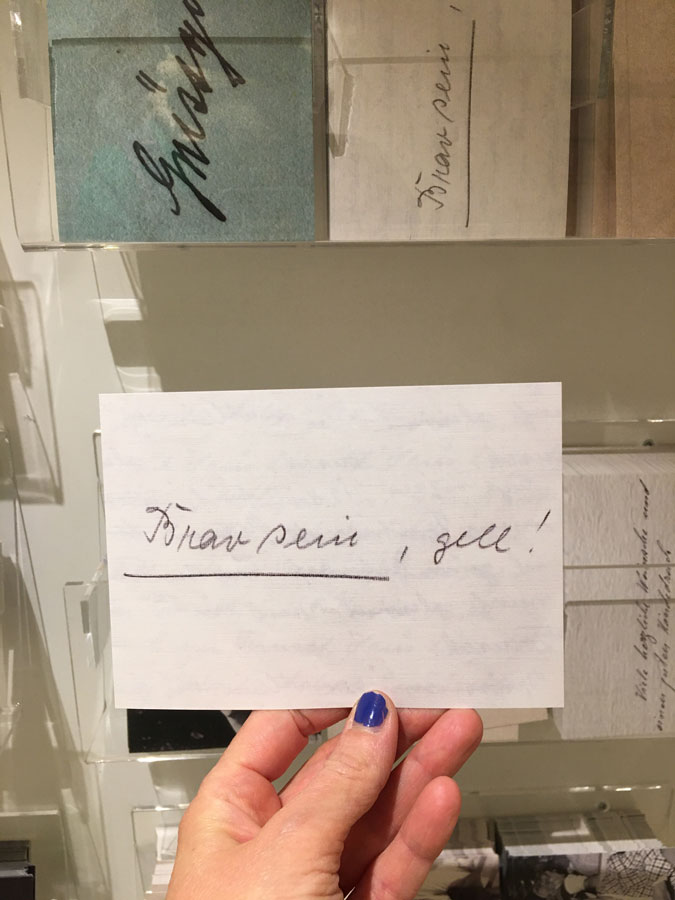
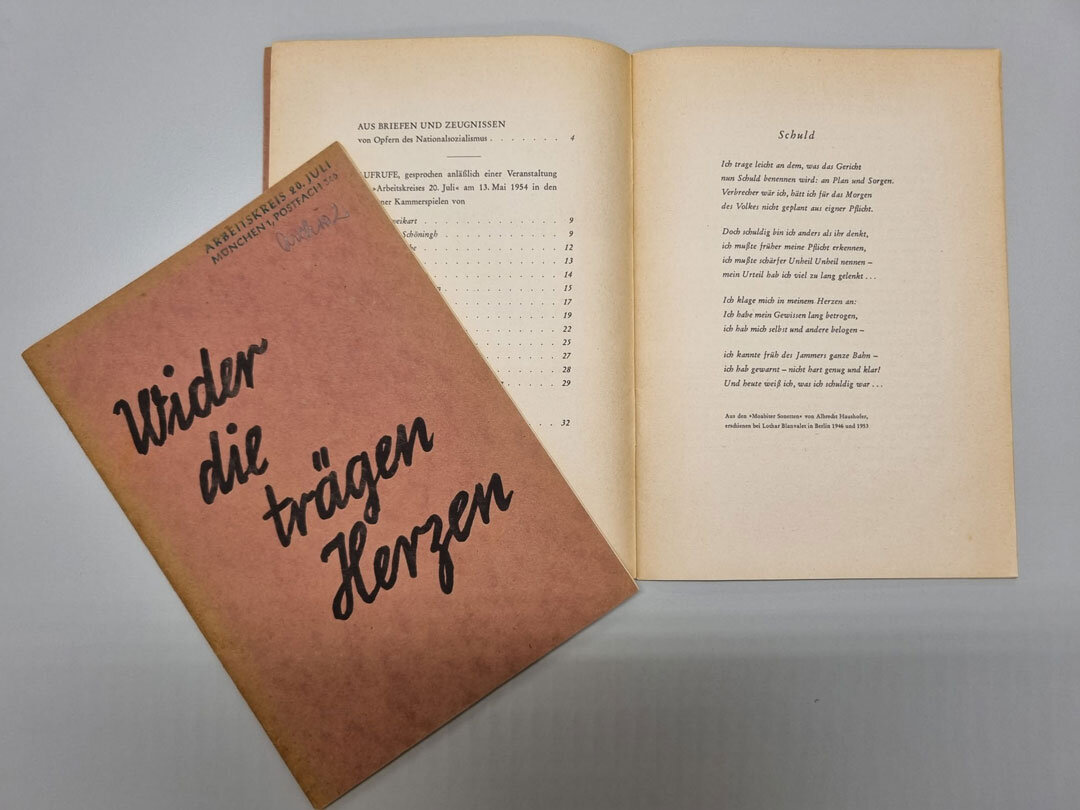
- Anke Buettner, Patrick Geiger (Ed.) «Literatur & Haltung. Rachel Salamanders Archiv» (Archive Salamander Textbook), 2026.
- Anke Buettner, Olivia Ebert, Viola Hasselberg (Ed.)– Female Peace Palace. Schreiben, Widerstand und Pazifismus im Krieg (Writing, resistance, and pacifism in times of war), Berlin, 2024
- Anke Buettner, Laura Mokrohs, Sylvia Schuetz (Ed.) – Frei leben! Frauen der Bohème 1890–1920 (Live Freely! Women of the Bohemia 1890–1920), Berlin, 2023
- Gabriele von Bassermann-Jordan, Waldemar Fromm, Wolfram Göbel, Kristina Kargl (Ed.) – Frauen der Bohème 1890–1920. Ausgewählte Beiträge zur Ausstellung «Frei leben!» (Women of the Bohemia 1890–1920. Selected contributions to the exhibition “Live Freely!”), Munich, 2022
- Literarische Erkundungen (Literary Explorations) – Literaturportal Bayern (Literature Portal Bavaria) I Authors: Katrin Diehl, Fabienne Imlinger and Volha Hapeyeva
Community Hashtags I #FemaleHeritage
- #AtelierMonaco-Szene
- #ErikaMann
- #FemaleHeritage
- #FemalePeacePalace
- #FemaleSociety
- #FrauenDerBoheme
- #ErinnerungskulturDerVielen
- #LiterarischesMünchen
- #RabePerplexum
Real-time Acquisition and Outreach Project
Living Literary Archive – Film Portraits of Female Authors from Munich
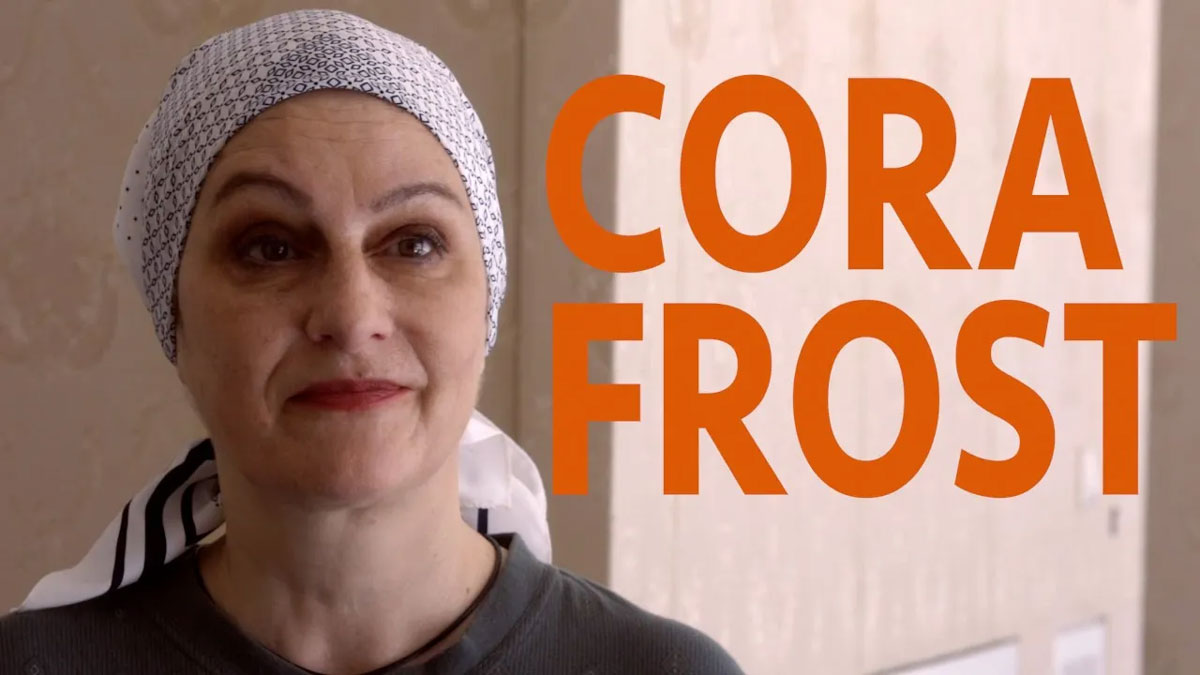
- Amelie Fried: Ich bin ein sehr politischer Mensch, 30 Min.
- Cora Frost: Eigene Sachen machen, dafür ist man auf der Welt, 34 Min.
- Cora Frost: Fucking Paradise Now, Performance, 4 Min.
- Dagmar Nick: Gedichte kommen oder kommen nicht …, 40 Min.
- Asta Scheib: Vielleicht ist es so, dass ich nur Romane sehe, 28 Min.
- Dana von Suffrin: Otto ist ein Buch über Väter …,30 Min.
- Yirgalem Fisseha Mebrahtu: Alekhu – I’m still alive, 44 Min.
- Mira Mann: Fehler, Träume, Angst, Liebe, 34 Min.
- Archiv Salamander | Trailer (Film 2026)
All videos by Christiane Huber and Sven Zellner. Editing: Christine Schnorr
All videos are freely available at no cost, including for screenings outside Monacensia. Accompanying material Museum Education Center, Munich
Munich Kammerspiele
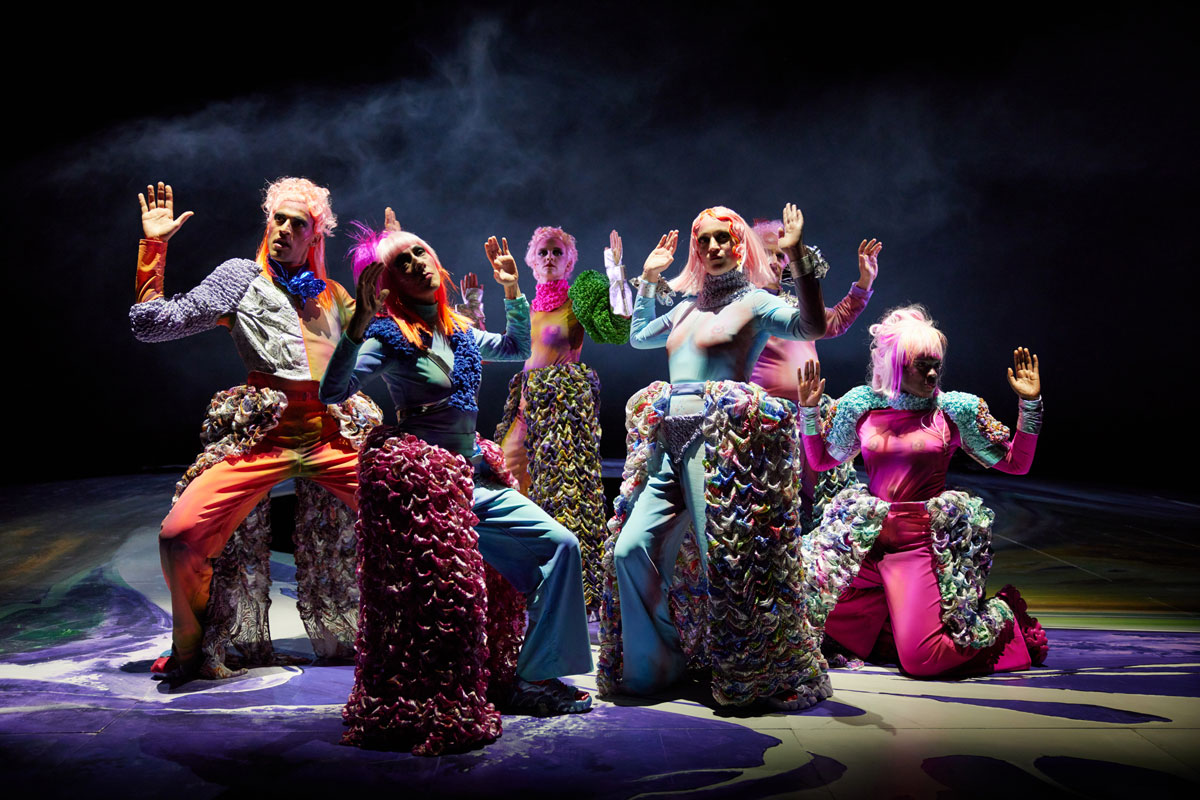
Selected examples
Joint projects: Munich Kammerspiele and Monacensia
- FemalePeacePalace – Festival. Artistic direction: Anke Buettner, Olivia Ebert, Rebecca Faber, Viola Hasselberg
- AntiWarWomen. Director: Jessica Glause, Script: Olivia Ebert
- MK SchulCampus # 2 «AntiWarWomen». Cultural outreach: Julia Lena Maier
- MK Podcast Female Peace Palace. Six parts. Host and concept: Fabienne Imlinger
- MK Book Presentation & Reading – Female Peace Palace with Jessica Glause, Volha Hapeyeva, and Hana Stojic. Hosts: Anke Buettner and Olivia Ebert
- MK Digital Program Guide AntiWarWomen
- Bayerische Suffragetten (Bavarian Suffragettes). Script development and direction: Jessica Glause. Script: Viola Hasselberg
- MK Digital Program Guide. Bayerische Suffragetten (Bavarian Suffragettes)
- Ich will ja nicht schön sein, ich will zum Theater. Ein Vormittag für Therese Giehse (I’m not trying for pretty, I want to go to the theater. A morning with Therese Giehse)
- Ja mei, wohin soll’s schon gehen? Ein Hörspaziergang mit und über Therese Giehse (Well, wherever should we go? An audio walk with and about Therese Giehse). Direction: Anne Sophie Kapsner. Script: Felicitas Friedrich
- MK Campus #21 «Grüß Gott, Frau Giehse» – a Workshop Weekend. Cultural outreach: Julia Lena Maier
Cooperations
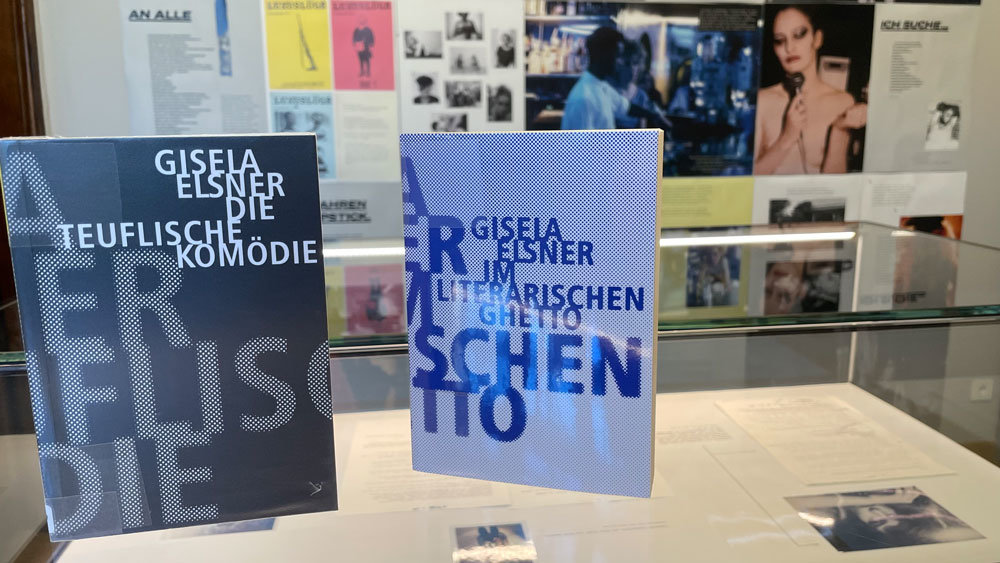
- Jump from the Ivory Tower Direction: Pınar Karabulut, Script: Mehdi Moradpour I MON Mag Gisela Elsner
MK Digital Program Guide Gisela Elsner – Germany, a Panopticon - Ghosts – Erika, Klaus, and The Wizard, by RAUM+ZEIT, Director: Bernhard Mikeska, Script: Mehdi Moradpour
- Five to Six Rolls and a Cold Sausage, Lena Christ’s «Erinnerungen einer Überflüssigen» (Memoirs of a Superfluous Woman), An Imagined Continuation – a Stage Evening About Surviving, Direction and play: Annette Paulmann, Script: Viola Hasselberg
About the Collaboration
- MK: FEMaleSociety – Monacensia and Munich Kammerspiele
- #FemaleHeritage: Rediscovering Munich’s Female Cultural Heritage – blog post by Anke Buettner for the Library Forum Bavaria (Bibliotheksforum Bayern) 1/2025, p. 28–31
MON Mag – Online magazine and Publication Platform for Blog Posts, Video, and Audio
- #FemaleHeritage, Collection of all related contributions
- Remembrance Culture of the Many and Curatorial Field Research: Monacensia Manifesto on Curating in Step with Time, 2021
- Memory with a Bend – Monacensia and #femaleheritage, 2020
Visual Design of #FemaleHeritage Exhibitions
Free – rebellious – female
The exhibition’s conceptual design combines Art Nouveau themes with the visual language of protest movements‘ graphic art.
• History for today – Erika Mann
Bequests and Legacies From Collection Creators Since 2020
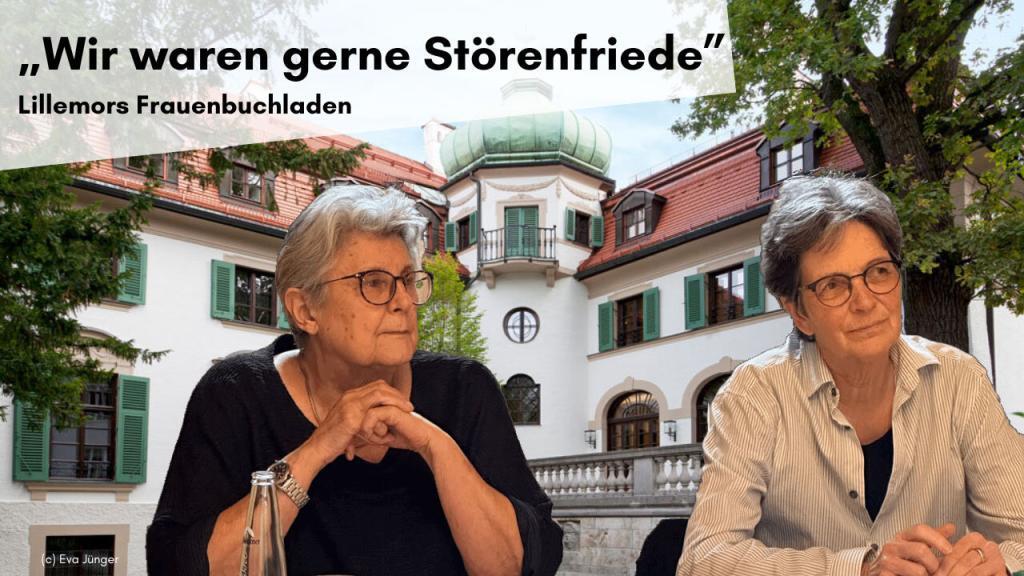
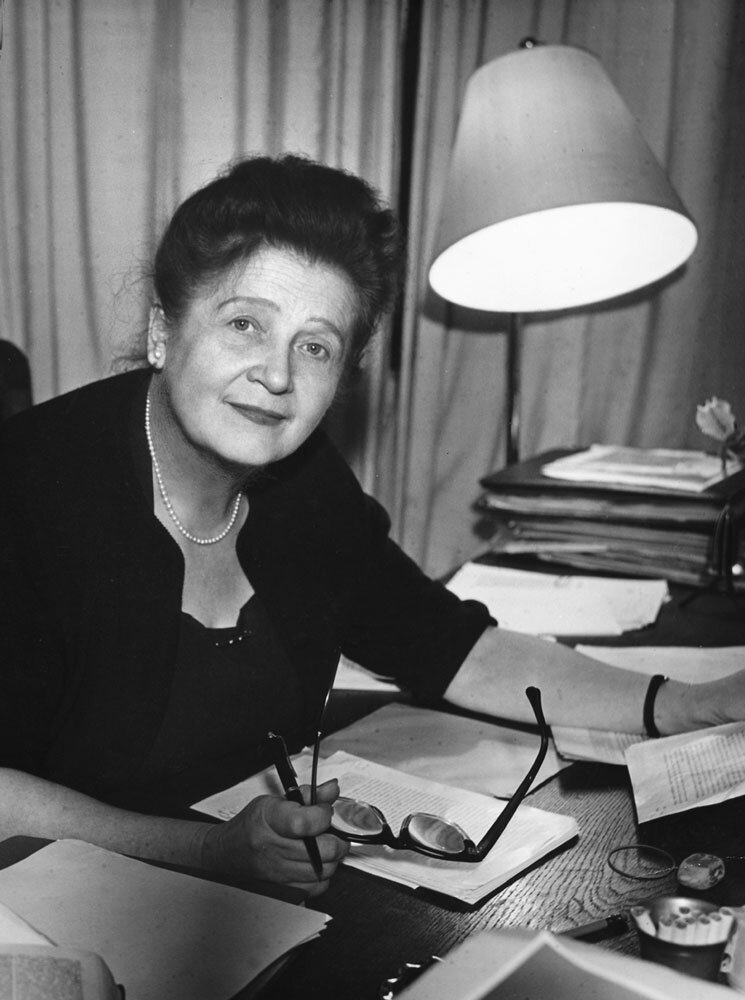
- Archive Rachel Salamander
- Lillemors Women’s Bookstore, Munich
- Emma Andijewska (born 1931), painter and poet
- Helene Böhlau (1856–1940), writer and member of the women’s rights movement
- Emma Bonn (1879–1942), poet
- Barbara Bronnen (1938–2019), writer
- Marie Amelie von Godin (1882–1956), Albanologist and writer
- Marie Herberger (1875–1963), artist and teacher at the Debschitz School
- Gabi Lodermeier (born 1953), cabaret artist and writer
- Elisabeth Mann Borgese (1918–2002), maritime law expert, ecologist, and writer
- Isabella Nadolny (1917–2004), writer
- Asta Scheib (born 1939), writer
- Cornelia von Seidlein, illustrator and painter
- Barbara Yurtdas (born 1937), poet and translator
Wikimedia and Wikipedia: Workshops – Lectures – Editathons
- Wikipedia: WikiMUC/2022-07-16 Editathon for Munich Women Writers
- Katrin Herwig: How do women write Wikipedia entries? «Wiki and Strong Women» – Workshop 1, blog post about the launch of LMU-PLUS Seminars for Students from the LMU Equality Officer
- Wikipedia: Wikipedian CulTour/Monacensia 2021: Wiki Loves Literatur and Female Heritage – Visiting Monacensia at Hildebrand House, including link selection
- FemNetz Conference 2022 – Lecture by Anke Buettner and Thomas Schuette “Online Resources and Archival Work About #FemaleHeritage at Monacensia »
- Design of public domain icons available for download on Wikimedia Commons: Emmy Hennings | Franziska zu Reventlow | Margarete Beutler
- Numerous blog posts or added sources on #FemaleHeritage, e.g., Rabe Perplexum
Collaboration and Partnerships
Selected examples
Libraries
- Archive Artist Publications, Munich
- German National Library, Exile Archive, Frankfurt am Main
- Forum Queer Archive, Munich
- International Youth Library, Blutenburg Castle
- Munich City Library
- University Library of Ludwig Maximilian University, Munich
- Bavarian State Library, Munich
Institutions and partners with a focus on democracy and education
- Alfred Landecker Foundation, Berlin
- City of Munich: Office of the Gender Equality Officer, Department for Democracy
- Bavarian Museum Academy
- Munich Adult Education Center
- Public History Munich
- Museum Education Center Munich and Bavaria
- Wikimedia Germany, Wikipedia Munich
- Commissioner of the Bavarian State Government for Jewish Life and Against Anti-Semitism, for Remembrance Work and Historical Heritage
Archives
- Archive of the German Women’s Movement, Kassel
- Archive of the Institute for Contemporary History Munich-Berlin
- Literature Archives of ETH Zurich
- Literature Archive Sulzbach-Rosenberg
- State Archives of Bavaria
- Munich City Archives
Museums
- Buddenbrook House, Lubeck
- German Theater Museum, Munich
- Jewish Museum Munich
- Lenbachhaus Municipal Gallery, Munich
- Munich City Museum
- Munich Documentation Center for the History of National Socialism
- State Museum of Egyptian Art, Munich
- Valentin-Karlstadt-Musäum, Munich
- Villa Stuck Museum, Munich
More institutions
- Munich Literature House
- Cultural Center of the Israelite Cultural Community of Munich and Upper Bavaria
- North Frisia Museum Association
- Husum Castle
- Lyrikkabinett Munich Foundation
- Association for Women’s Interests Munich
- and other GLAM institutions in German-speaking countries, Infopoint
Networks
- Annette Kolb Society, Munich
- Comic Network in Bavaria e.V.
- Friends of Monacensia e.V.
- KOOP-LITERA international
- Munich Theater Writers Association e.V.
- Thomas Mann International
- turtle magazin(e), Munich
Universities and research institutions
- University of Bern
- LMU Munich
- ETH Zurich
- University of Zurich
Many experts and diverse cooperation partners have contributed to the positive and dynamic development of #FemaleHeritage. Our network continues to grow: Thank you for your trust and inspiration!
Anke Buettner writes about #FemaleHeritage for MON_Mag:
- Anke Buettner: Happy Birthday – 5 years of #FemaleHeritage in: Open, Connected, Digital: #femaleheritage Is Reshaping the Monacensia – March 8, 2025
- Anke Buettner: #FemaleHeritage 2020–2025: What We Have Achieved – a Monacensia Cultural Heritage Project (German) – March 8, 2022
- Anke Buettner: Remembrance Culture of the Many and Curatorial Field Research: Monacensia Manifesto on Curating in Step With Time (German)– May 11, 2021
Anke Buettner
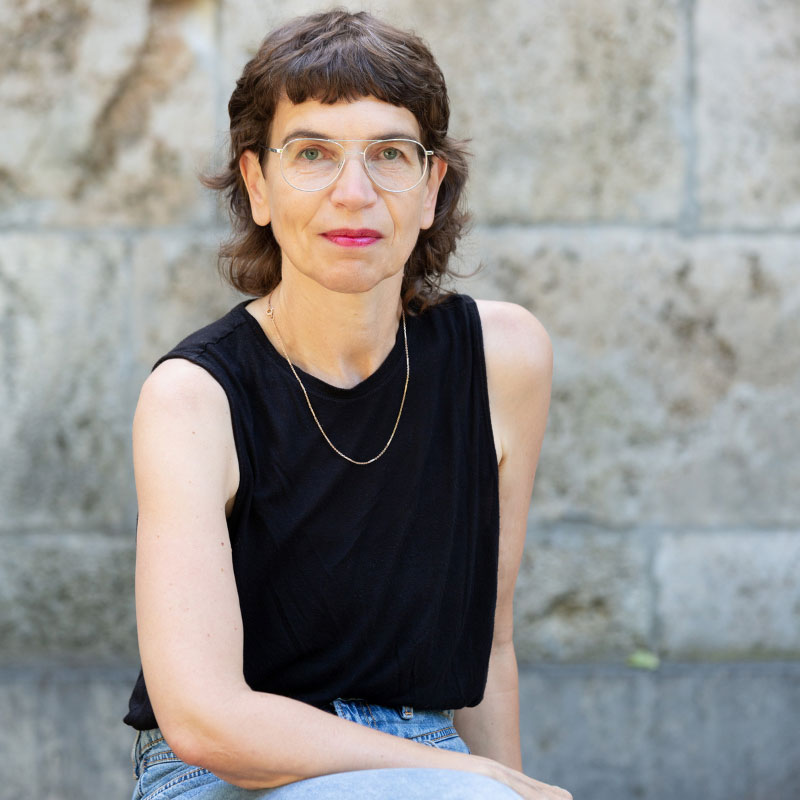
Since 2019, Anke Buettner has been the director of Monacensia at Hildebrand House. Her work centers on digitality and OpenGLAM. As a curator, she actively reshapes the literature museum and fosters a culture of remembrance for the many. Anke Buettner serves on the board of trustees of the German Literature Fund, the foundation commission of the Archive of the German Women’s Movement, and Thomas Mann International. She is the initiator of the research project #FemaleHeritage and the network FEMale*Society, a collaboration between Monacensia and the theater, Munich Kammerspiele. In 2023, she received the Karl Preusker Medal. Photo: © Eva Jünger.
Read more posts by this author
Translation by: Tracey Evans
Recommended citation:
Buettner, Anke (2026): «#FemaleHeritage 2020–2025: Initiatives und Development – A Monacensia Cultural Heritage Project, Part 2» MON Mag – The Online Magazine of Monacensia. Published on 9 September 2026. URL: https://mon-mag.de/femaleheritage-2020-2025-monacensia/, ISSN 2944-3776.