


Linking Munich’s rich literary legacy with its social landscape, the project #FemaleHeritage, launched in 2020, brings fresh perspectives to the Monacensia. This initiative aims to safeguard the cultural heritage of women, queer communities, and individuals who have faced exile and migration. It creates spaces for an open-knowledge culture while enhancing digital accessibility.
German original: This article is an English translation* of the German original »#FemaleHeritage verändert die Monacensia: offener, vernetzter, digitaler«, first published on March 8, 2025. Following the project’s Special Mention at the 7th Culture 21 International Award in 2026, the article is now available in English.
In her blog post, »Happy Birthday – 5 Years of #FemaleHeritage«, Anke Buettner, director of Monacensia, discusses Monacensia’s novel approach to preserving Munich’s literary legacy. Here are the topics she covers:
- Munich’s literary legacy – Taking Stock
- Field research in curatorial studies – A fresh approach
- »Collecting, preserving, and communicating« – Where are we today?
- The latest on our collection and communication practices – How we do what we do
- Atelier Monaco and Artists’ Villa
- #FemaleHeritage and the digital transformation
- Culture is free: Monacensia as a hub for open dialogue and exchange
Happy Birthday – 5 years of #FemaleHeritage
By Anke Buettner, Director of Monacensia at Hildebrand House
For us at Monacensia, #FemaleHeritage has become something of a road movie – a journey across Munich’s history and social landscape.
Over the past five years, Monacensia has been harnessing this interdisciplinary research project – and its community hashtag #FemaleHeritage – to enhance the institution’s accessibility for Munich’s urban population.
Cities are living, wide-open spaces. With its literary archive, Monacensia is an integral part of the city’s collective memory and stands at the center of how Munich lives and practices remembrance culture. That said, memory is neither objective nor neutral: people, events, and social structures shape our memories. With #FemaleHeritage, Monacensia is challenging itself to be more critical of – and to call into question – its own collection practices, and foster transparency in presenting its findings and conclusions.
#FemaleHeritage broadens our view of society and helps us understand Munich as a space where vastly different memories and writing cultures overlap. The temporal and geographical independence of the writers builds bridges between cities and countries, from the present to the past, and into the future.
Munich’s literary legacy – Taking stock
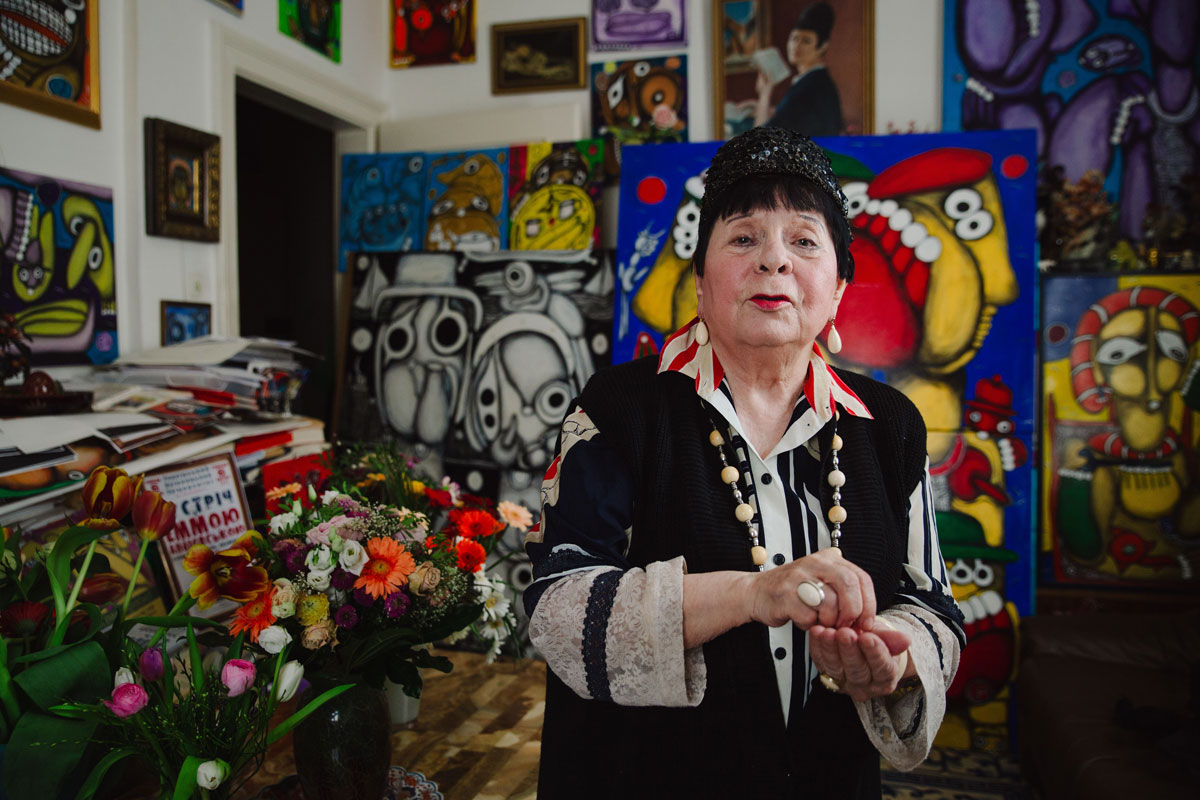
»Women who write face different standards than their male counterparts. Often, the subjects they choose are dismissed, and their capabilities, even talent, are denied. «
Jovana Reisinger, The Patriarchy Must Burn (German), 2022
About five years ago, Monacensia took stock of its “literary memory.” The goal was to
- better understand the city of Munich through its literature, and then
- find ways to create relevant forms of literary and cultural mediation from the archive holdings for today’s audience and
- facilitate more layered storytelling.
The analysis showed that Monacensia’s archive lacks evidence of many of the experienced realities typical of the social fabric of cities as diverse as Munich. The perspectives of women in various literary professions, especially, lack representation. These gaps in the collective memory mirror public perception. For a long time, the city’s literary memory either overlooked women’s experiences or presented them filtered through the lens of male perspectives. The realities of people in queer communities, or those who experienced migration or exile, faced similar forms of erasure and dismissal.
Field research in curatorial studies – A fresh approach
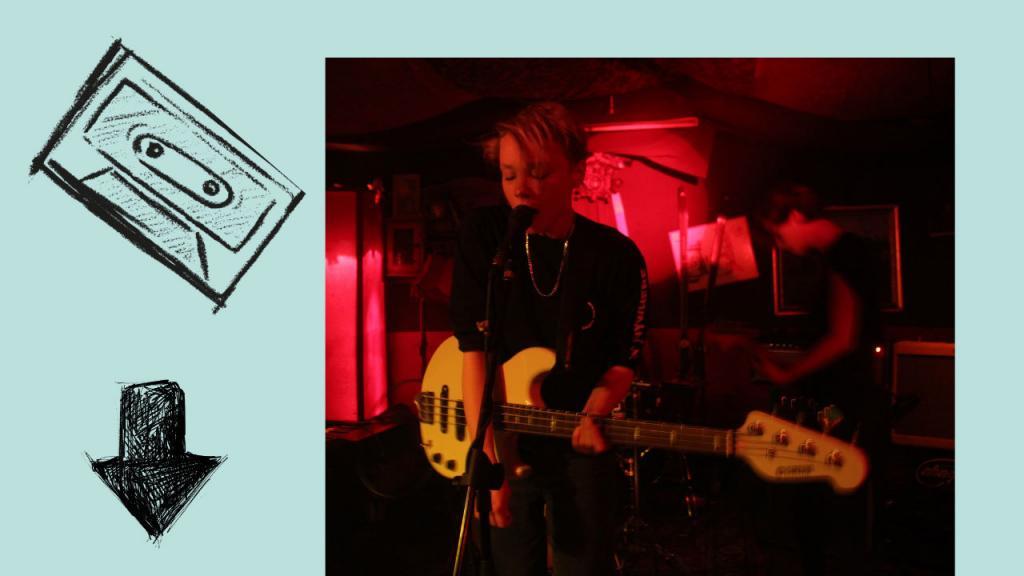
To this very day, I don’t know whether this is a story of peace or violence. […] Is there someone else out there today telling this very story?
Lisa Jay Jeschke in an interview on the audio performance Erika and Therese GAY AGAIN (German), 2020
Engaging with the dynamics that created these gaps in memory and inventory in the first place became a leitmotif for Monacensia archivists, curators, educators, and librarians. To swiftly address identified gaps while incorporating a variety of perspectives, the Archive not only cataloged its collections but also actively sought out the missing information. And it invited various networks and target audiences to be part of the process.
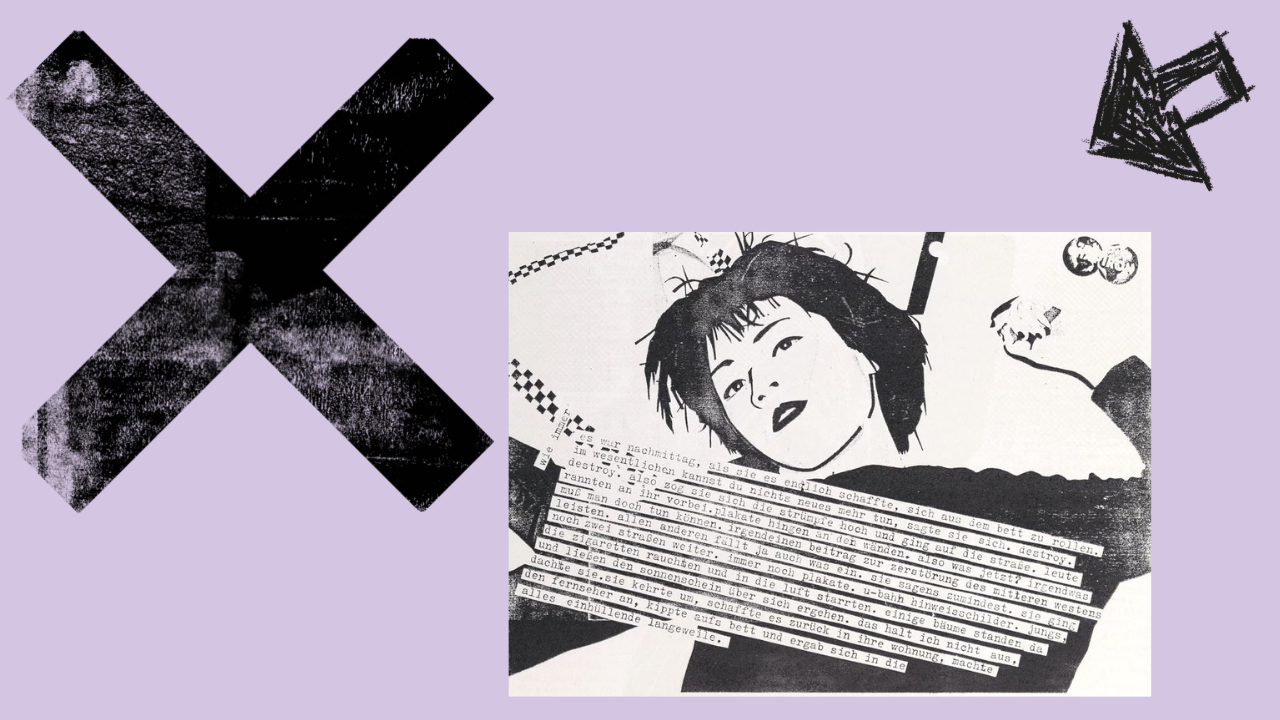
This strategy engages the public in the decision-making process regarding areas to focus on in both research and communication. This interaction is most successful in the context of exhibitions, as their stories can continue on the Monacensia blog MON Mag long after the physical exhibition has been dismantled. The exhibition Pop, Punk, Politics – The 1980s in Munich took this approach to the next level: A Monacensia manifesto officially acknowledged it as the Curatorial Field Research method. With Maria Theresia 23. Biography of a Munich Villa, a permanent exhibition scheduled to open in late 2024, the methodology of curatorial field research has further matured. Now, the overall exhibition design supports digital retelling under the #MON_Villa hashtag and a minimum of six years of collective collection work.
By addressing existing gaps, purpose-built collaboration partnerships gradually transform the processes of collecting and communicating that continue to narrow our understanding of Munich’s diversity. We share the findings from our collaborative research through blog posts, lectures, and events, ensuring they continue to reach new audiences.
With the upcoming release of the Literary Archive’s new collection profile, we reach another critical point in this process. In a similar vein, the Monacensia Library will collaborate with authors and networks to update and refine its collection profile.
A key requirement for fostering openness—namely, encouraging participation and fostering collaboration—is digital curation and networking within communities. Although they are crucial, both functions have yet to be established within the institution as permanent full-time positions.
»Collecting, preserving, and communicating« – Where are we today?
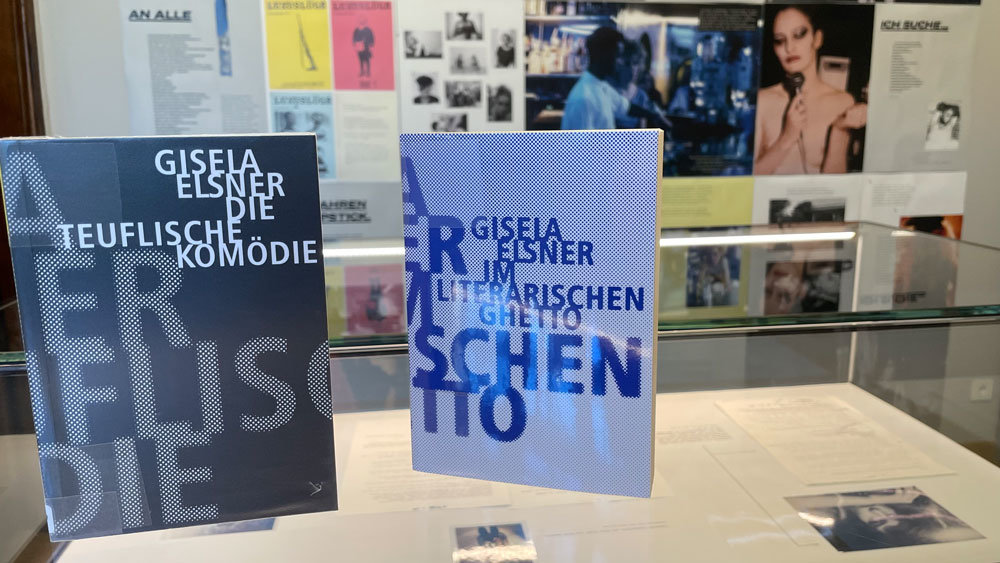
»Collecting, preserving, and communicating« is a guiding principle in the realm of archives and museums, almost by default linked to the idea of objectivity. Despite this, institutions dedicated to preserving collective memory are never impartial – they are invariably influenced by the prevailing spirit of the times. When it comes to gaps in inventory, it’s clear that significant parts of Munich’s population have remained invisible due to Monacensia’s collection and communication practices. This does not speak to its objectivity.
Because of the many loose threads and open ends in the archive, curation decided to start by focusing on female cultural heritage. Monacensia would introduce the community hashtag #FemaleHeritage, and, with the help of a group of allies in the German-speaking world yet to be determined, begin searching for traces.
The blog parade Women and Memory Culture served as an interactive invitation to launch the initiative. The appeal was widely shared, with coverage across various media outlets. The response was tremendous. Each contributor received personalized guidance throughout the process of writing for the web. This fostered strong, ever-changing connections and significant contributions, all of which are documented in MON Mag, the new online magazine.
The latest on our collection and communication practices – How we do what we do
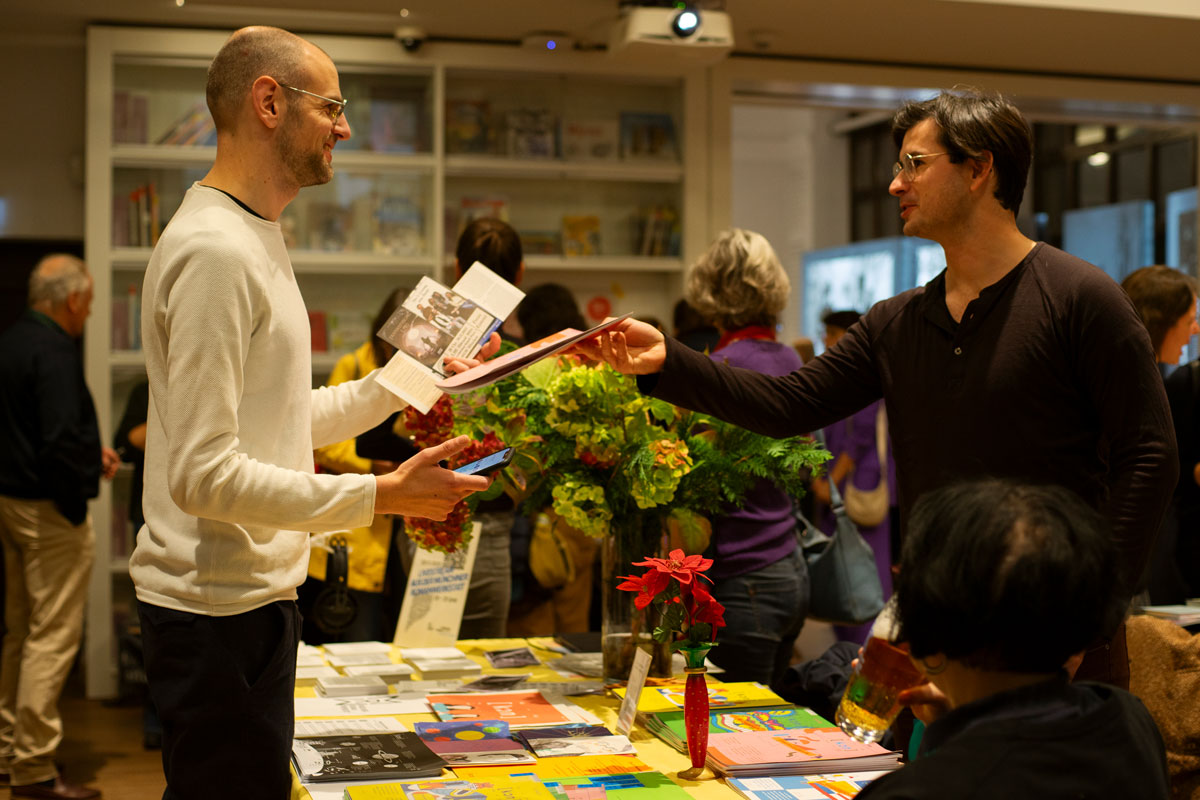
The discussions surrounding the historical basis and societal impacts of our collection’s mandate brought about considerable changes at Monacensia. Suddenly, the team found itself discussing:
- Open spaces for culture and knowledge
- Digitality as opposed to digitization
- Educational and knowledge equity
- Fair pay
- The founding history of Monacensia
- Monacensia’s collection and communication practices since the 1920s
- Participation and sharing
- Interpretive authority
- Target audiences
- Organizational structures
- Administration
- Adequate communication of knowledge
The experience was both inspiring and unsettling: a mountain of tasks and obligations, and an urgent need for change, loomed ahead.
In a later phase of the #FemaleHeritage project, the team started to jokingly reframe »collecting, preserving, and communicating« as »loving, caring, and sharing.« The personal challenges and friction that this period of upheaval has created, and continues to create, demand significant resilience and trust from everyone involved. The Monacensia team continues to find significant meaning in their daily efforts, celebrates its achievements in #FemaleHeritage, and enjoys substantial recognition from external parties.
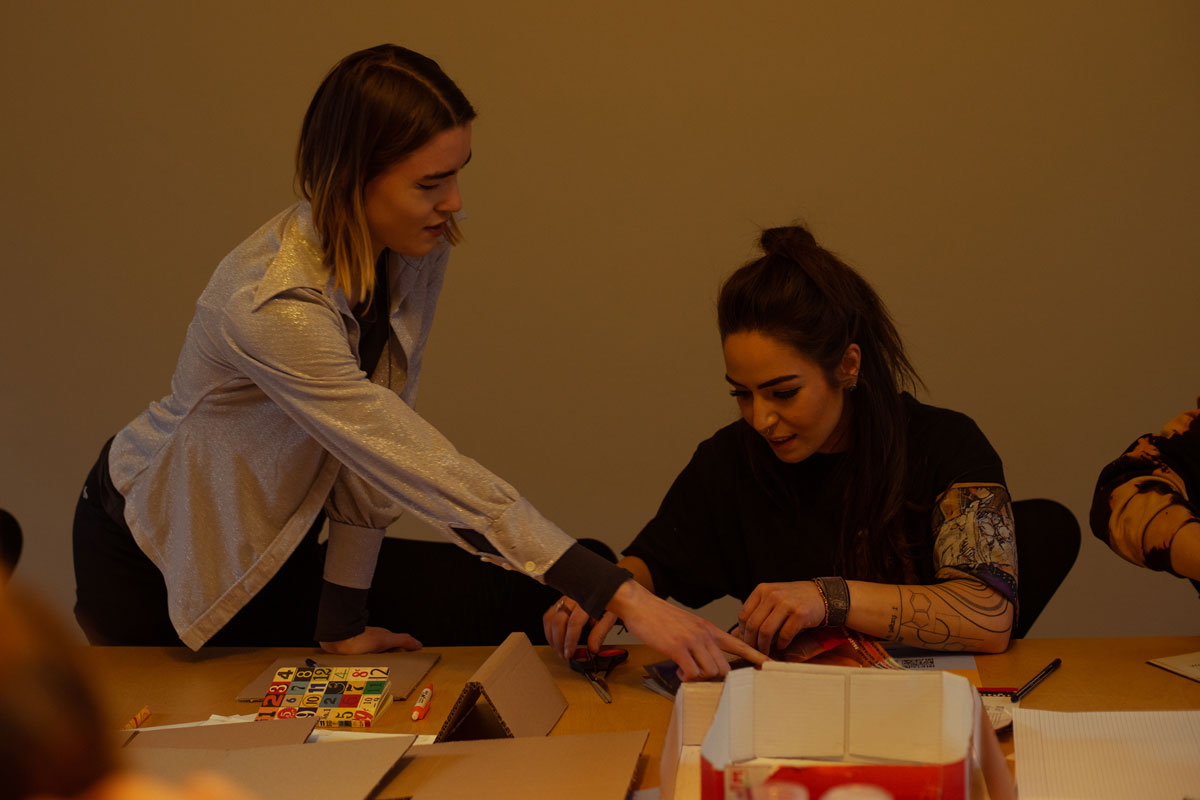
Through extensive discussions and collaborative projects with various archives, libraries, and open networks, Monacensia has cultivated a fresh approach to collaboration in its collection and outreach initiatives. This mindset is clearly reflected in collaborative projects with authors and cultural institutions, but above all in how challenges are tackled together. »Sharing & Caring« promotes knowledge exchange, conserves resources, and strengthens cohesion.
The strong recognition of #FemaleHeritage, along with Monacensia’s efforts to foster greater openness, makes it easier to navigate challenges and setbacks. This environment allows the team to work together effectively in creating a literary memory of the many.
The #FemaleHeritage initiative has turned the Bogenhausen villa into a vibrant social hub and gathering spot.
Atelier Monaco and artists’ villa
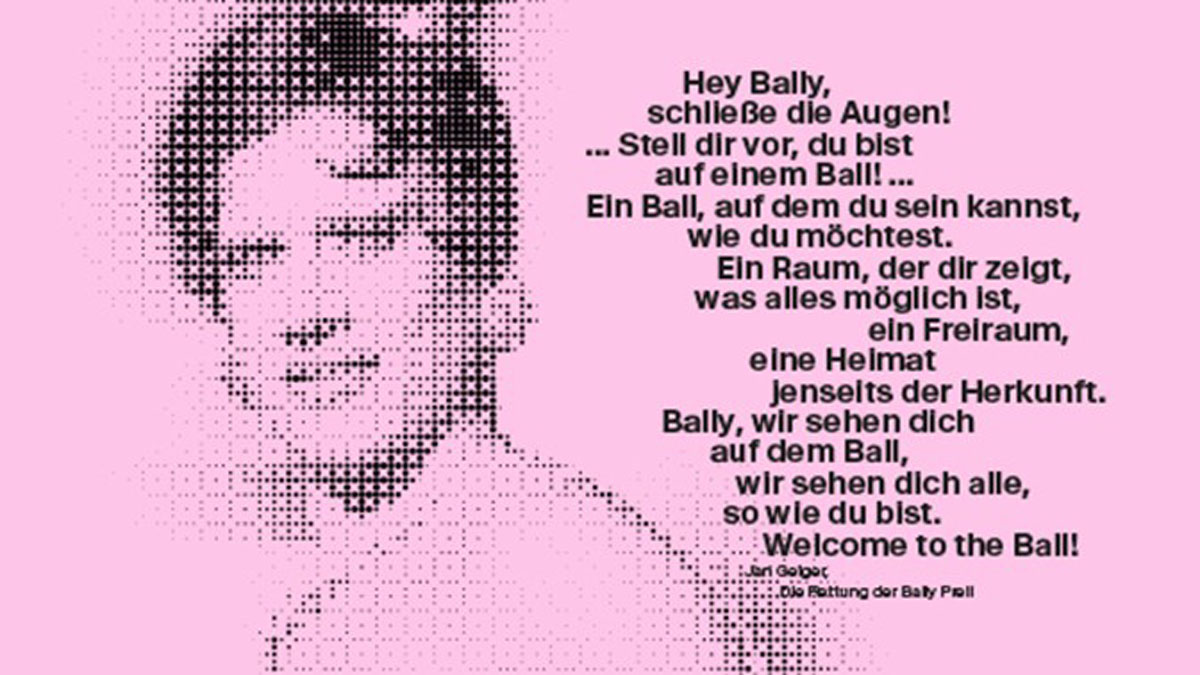
Fueled by #FemaleHeritage and sped up by COVID-19 lockdowns, Monacensia has shifted away from a program heavily shaped by the event-driven culture of the 1990s. In the past, audience expectations of the program reflected the then-common collection practice, which was based on the classical literary canon. It follows that the audience, too, was predominantly homogeneous. However, the event program itself failed to align with the interests of younger audiences and the evolving literary scene.
For Monacensia, openness has become the new guiding principle of curation, replacing individual events and long-established program formats. Programs, exhibitions, and analog and digital communication now serve as triggers – as invitations to question and supplement what the literary memory contains. From the institution’s viewpoint, no area can be deemed »closed.«
The way Monacensia engages authors as artistic researchers, participants, and activists in support of Munich’s literary heritage has undergone a significant transformation. This shift started with the introduction of a new program and curatorial format, Atelier Monaco, which uses the community hashtag #AtelierMonaco-Szene.
Munich authors and artists are transforming Monacensia, housed in the 19th-century villa and former home of sculptor Adolf von Hildebrand, into a very contemporary artist’s villa. Accordingly, they have a room of their own in the new permanent exhibition. With #SchreibResi, Monacensia has created a writing residency format with its own curatorial mandate. So far, Dana von Suffrin, turtle magazin(e), and Annegret Liepold have taken on the role of artist-in-residence.
Getting authors and artists involved in the curation of the Monacensia program, beyond simply commissioning works, ensures the program remains open to a broader range of perspectives on artistic work and life in Munich.
#FemaleHeritage and the digital transformation
The five-year mark of #FemaleHeritage shows the progress we’ve made in increasing the availability of research data for the sciences, for example, via Kalliope or Archivportal-D. The digital accessibility of Monacensia’s content still has room for improvement. Most importantly, we have yet to integrate analog and digital activities on a single central online platform.
The monacensia-digital.de portal offers free access to archived materials from the Literary Archive, inviting audiences to explore exciting original sources of literary and cultural history. The first exhibition to integrate these sources on-site via QR codes was the Erika Mann. Cabaret Artist – War Reporter – Political Spokesperson exhibit.
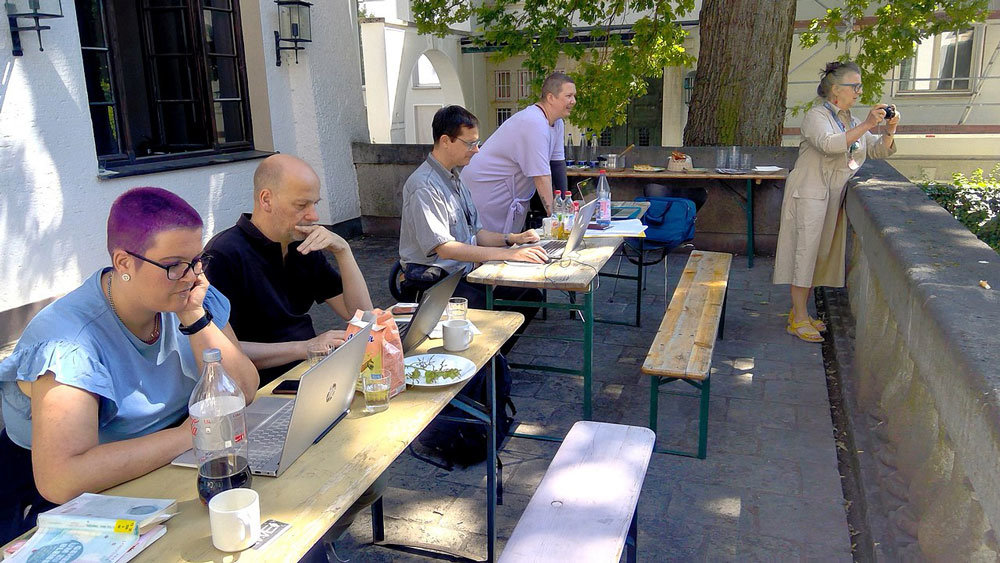
Monacensia regularly collaborates with various academic institutions and partners on #FemaleHeritage. The selection criteria emphasize specific female authors, female cultural heritage, or the broader focus on remembrance and memory culture.
The digital transformation of public cultural institutions and the active participation of audiences and employees are at the very core of the #FemaleHeritage initiative. Working alongside Wikipedia activists who focus on #FemaleHeritage topics has proven especially productive. They not only maintain these subjects on Wikipedia but also conduct Wiki workshops.
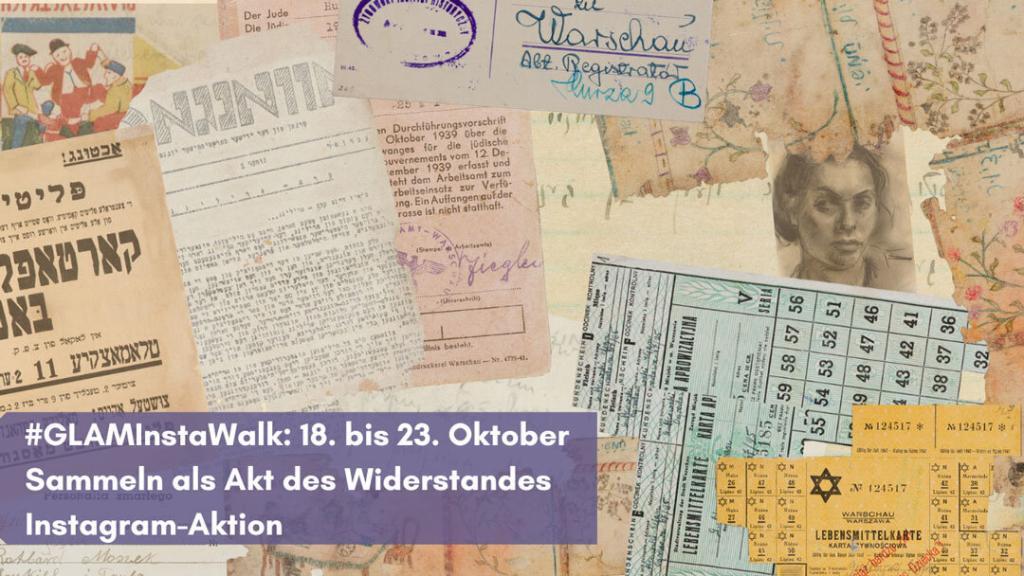
Other noteworthy collaborations, in a more collegial context, include the Public History office of Munich’s Department of Culture, the Munich Kammerspiele, and several Munich cultural institutions that have regularly co-hosted the #GLAMInstaWalk since it debuted in 2023.
Culture is free: Monacensia as a hub for open dialogue and exchange
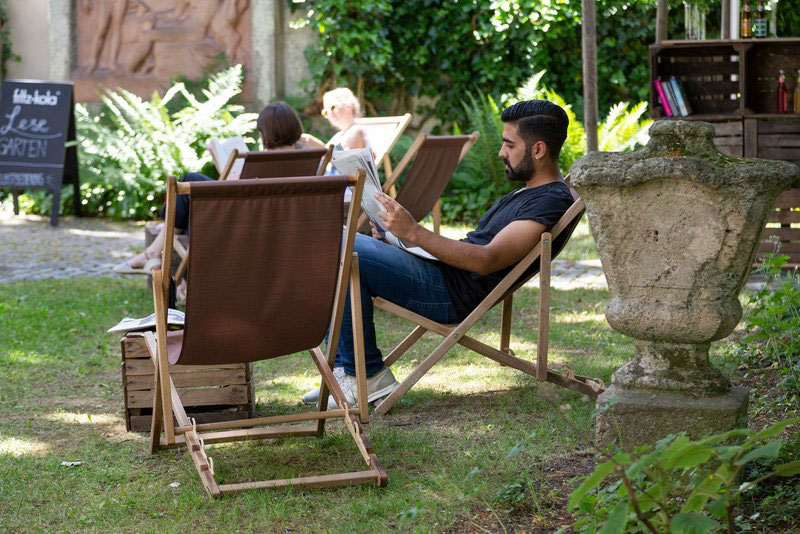
As a municipal institution, Monacensia is part of the Munich City Library. The multi-disciplinary center combines under one roof:
- a literary archive,
- a library,
- a museum,
- an open artists’ villa, and
- a café.
Confronting the topic #FemaleHeritage has encouraged deeper, more intensive work with communities and associations, many of which focus on issues such as poverty, health, education, and peace. More importantly, committed initiatives often create new spaces for social and cultural exchange. This is why the digital retelling and narrative continuation of the exhibition Pop Punk Politics. The 1980s in Munich included a call for submissions that would explore the significance of cultural centers and archives as autonomous spaces for artists in society.
Monacensia’s non-commercial objective as a venue offering free admission, free Wi-Fi, and a beautiful public garden in the million-strong city of Munich has gained renewed relevance, especially in the wake of the COVID-19 lockdowns. At the same time, the communication and negotiation processes prompted by these initiatives became a blueprint for transforming Monacensia itself.
Over the course of the #FemaleHeritage years, Monacensia has grown ever-closer ties to the urban landscape it inhabits, evolving from a traditional municipal facility into a literary institution open to all. Its stately Bogenhausen villa has emerged as a space “where we share, exchange, call out, discuss, and celebrate what moves us” (Caitlin van der Maas, Atelier Monaco).
5 years of #FemaleHeritage – an overview of the projects:
- Anke Buettner: #FemaleHeritage 2020–2025: Initiatives and Development – a Cultural Heritage Project by Monacensia, Part 2 – April 7, 2025
- Anke Buettner: #FemaleHeritage 2020–2025: What We Have Achieved – a Cultural Heritage Project by Monacensia – March 8, 2022
- Anke Buettner: Remembrance Culture of the Many and Curatorial Field Research: Monacensia Manifesto on Curating in Step with Time – May 11, 2021
Anke Buettner
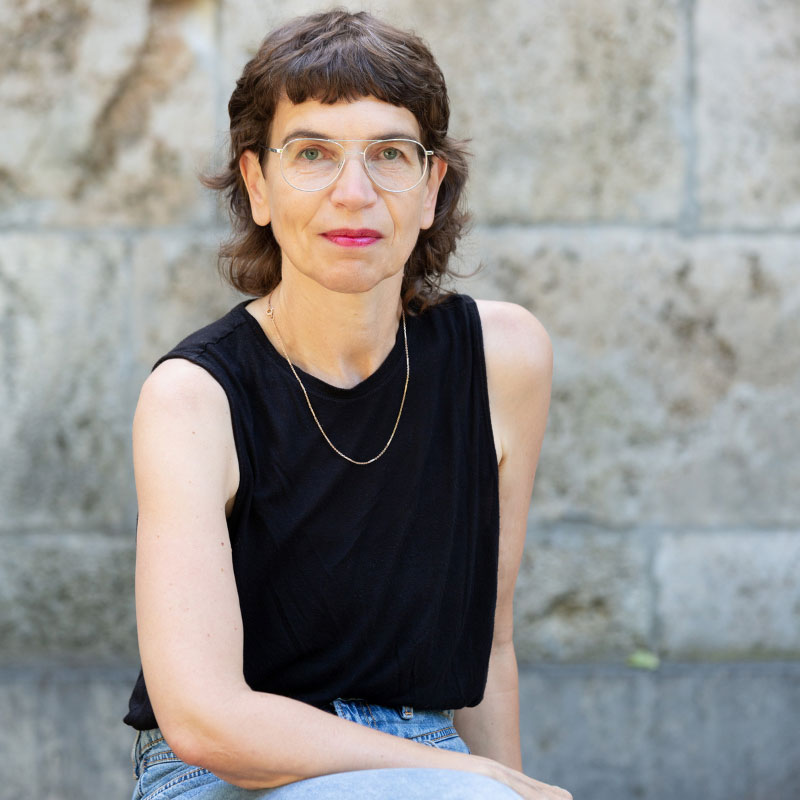
Since 2019, Anke Buettner has been the director of Monacensia at Hildebrand House. Her work centers on digitality and OpenGLAM. As a curator, she actively reshapes the literature museum and fosters a culture of remembrance for the many. Anke Buettner serves on the board of trustees of the German Literature Fund, the foundation commission of the Archive of the German Women’s Movement, and Thomas Mann International. She is the initiator of the research project #FemaleHeritage and the network FEMale*Society, a collaboration between Monacensia and the theater, Munich Kammerspiele. In 2023, she received the Karl Preusker Medal. Photo: © Eva Jünger.
Read more posts by this author
Translation by: Tracey Evans
Recommended citation:
Buettner, Anke (2026): «Open, connected, digital: #FemaleHeritage is reshaping the Monacensia.» MON Mag – The Online Magazine of Monacensia. Published on 29 June 2026. URL: https://mon-mag.de/femaleheritage-monacensia/, ISSN 2944-3776.

Ein Kommentar